
Loblolly pine, by the numbers
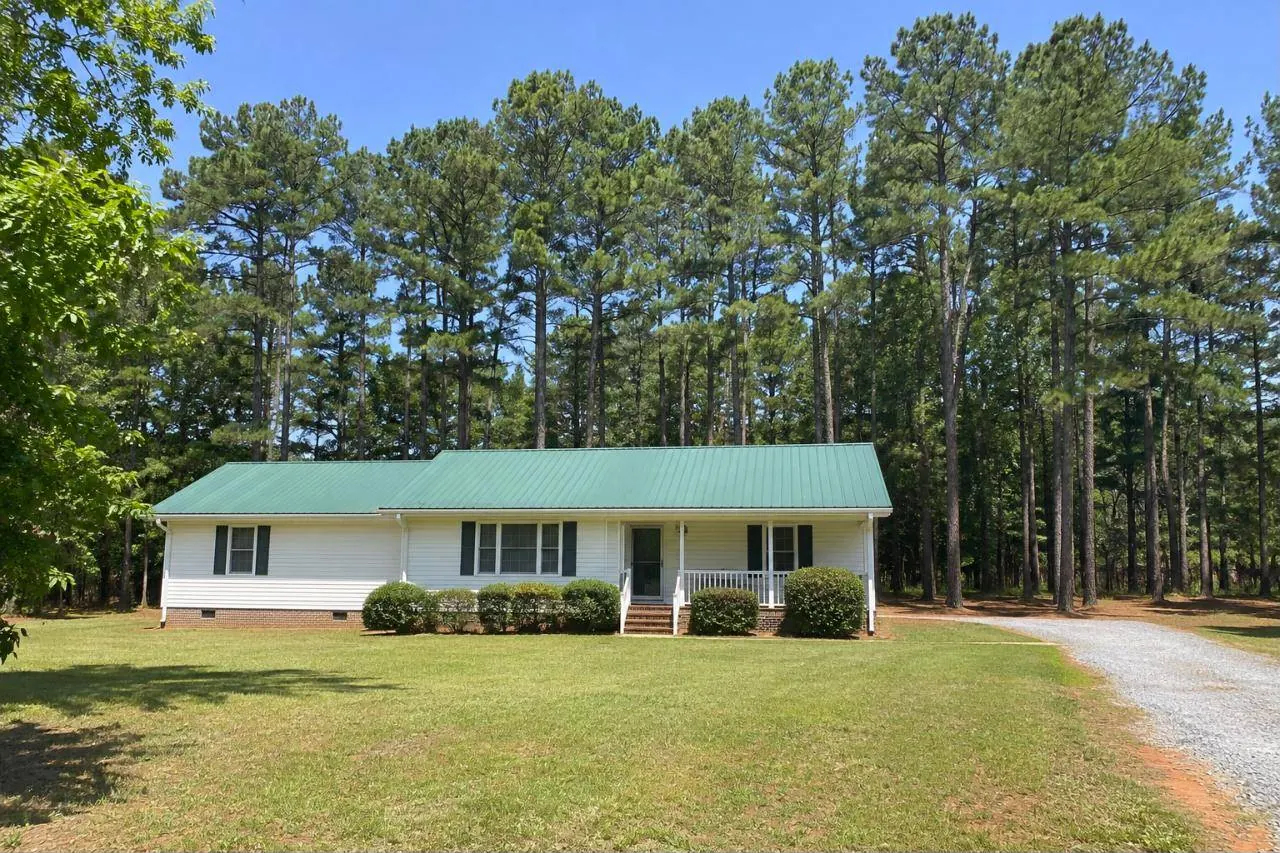
The U.S. Forest Service's Fire Effects Information System profile of loblolly pine describes a tree that reaches 90 to 110 feet tall and 24 to 30 inches across at maturity. That's taller than most houses are wide, which is why a pine standing 40 feet from the back wall can still reach the roof.
Its roots explain a lot about how it behaves in wind. In deep sandy or loamy soil, the profile says, loblolly grows a taproot 4 to 5 feet long, but in clayey soil the taproot is much shorter and stouter, and its side roots often spread wider than the crown. The species is relatively windfirm where soils are deep, the profile says, while windthrow is common on shallow soils. On a red clay lot, then, a pine's real anchor is that wide spread of side roots. Trenching for a water line, a new driveway or a septic repair inside that spread cuts into the anchor.
Ice, wind and tall pines
Pines keep their needles all winter, and every needle can hold ice. In the February 12–13, 2014 ice and snow storm, the State Climatology Office reports that the SC Forestry Commission put timber damage at $360 million across more than 1.5 million acres, and Lancaster itself recorded 8 inches of snow.
Research in South Carolina points to which pines snap. After a January 2004 ice storm left about 2 centimeters of ice on a 4-year-old loblolly plantation, Forest Service and university researchers found that the trees that broke were taller and thicker, with more leaf, branch and crown weight, than the trees that didn't. The authors concluded that size and growth stage mattered more than weak wood.
Hurricane wind is the other test, even this far from the coast. As Hugo crossed the state on the night of September 21, 1989, the National Weather Service in Columbia warned Lancaster and other South Carolina counties that the wind could bring down large limbs and uproot trees across roads.
Pine beetles
The Forest Service profile says loblolly pine is severely attacked by the southern pine beetle. South Carolina has lived through bad outbreaks. The Forest Service's South Carolina forest health report for 2001 counted more than 21,900 infestations that year, with 14 counties in outbreak status, mainly in the Piedmont. Its 2002 report called that year's activity the most severe recorded in the state: 23 counties in outbreak status and $250 million in documented losses, with the heaviest activity in the foothills and Piedmont. The 2025 report, by contrast, found no southern pine beetle outbreaks, with beetles trapped in a handful of Upstate and western counties.
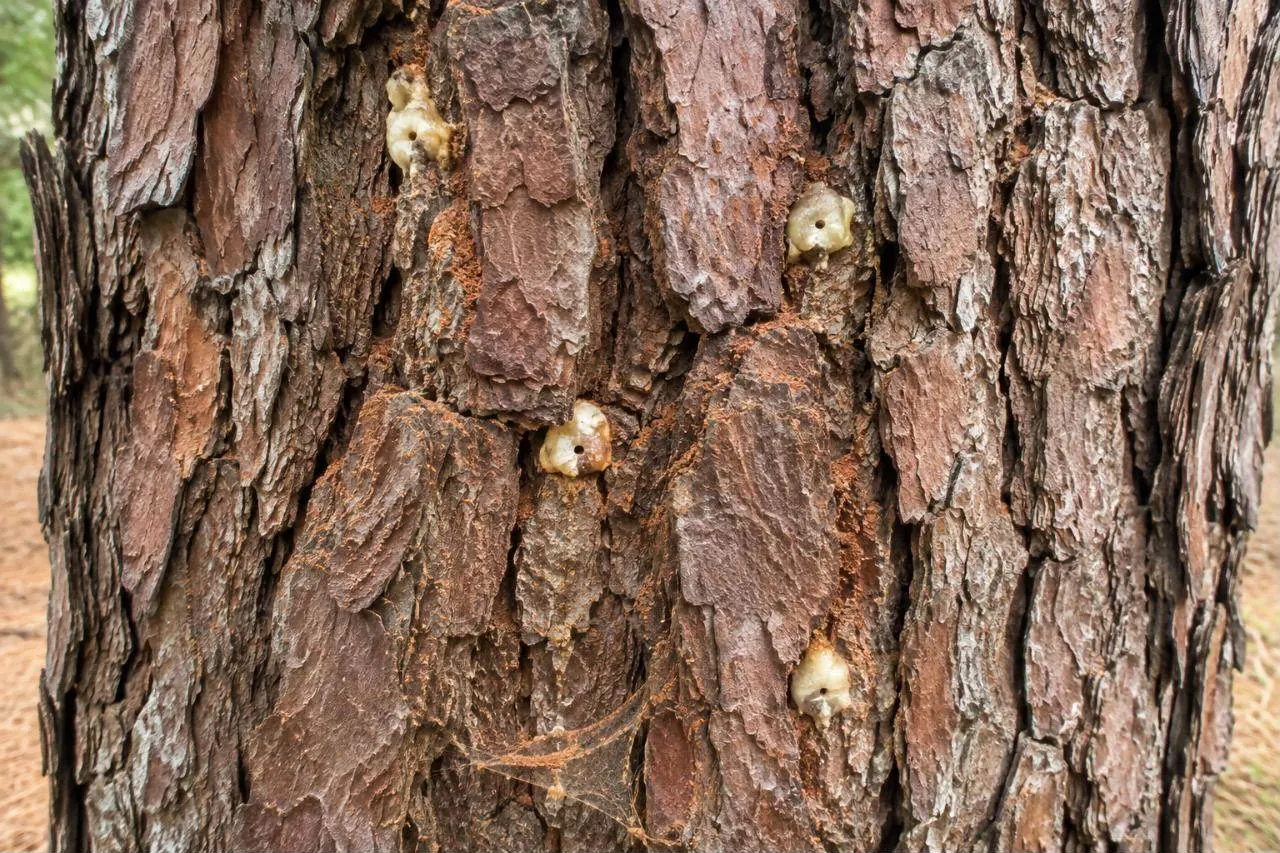
In a yard, the threat is usually one or two pines at a time. Clemson's Home and Garden Information Center lists what to look for:
- Pitch tubes. Southern pine beetle leaves small, popcorn-like lumps of resin, under half an inch across, sometimes dusted with brown sawdust.
- Boring dust. Ips engraver beetles make fewer pitch tubes, but brown dust may gather in the bark.
- Big tubes low on the trunk. Black turpentine beetle makes large pitch tubes on the lower 10 to 12 feet.
- A fading crown. Needles go from yellow to orange and then red, a change Clemson says homeowners often notice too late.
Beetles pick stressed trees: Clemson names overcrowding, drought, disease, soil compaction, equipment damage and lightning strikes. Its advice for a yard full of pines is to protect trunks and roots from mowers and trimmers, keep vehicles off the root zone, water in dry spells, and remove injured or diseased trees, since they attract beetles. It adds two cautions for removal day: don't wound the neighboring pines, and clear away the slash and downed logs, which Ips can breed in.
Pines close to the house
There's no fixed distance at which a pine becomes too close. What matters is its height set against its distance from the house, which way it leans, whether the soil around it has been dug or packed down, and whether the crown is healthy. A tall, straight, healthy pine well away from the house may be a fine tree to keep. One that's leaning toward the roof, sits where a new driveway cut its roots, or shows pitch tubes is a different story. See dead or leaning trees for the lean warning signs.
How a tall pine comes down
A pine's straight trunk and small limbs make it simpler to take apart than a spreading oak, but its height means few yards have room to drop one whole.
- Felled whole where there's a clear lane, usually toward the woods or an open field, longer than the tree is tall.
- Taken down in pieces near the house. A climber limbs the trunk on the way up, then cuts the top and the trunk in sections that are lowered on ropes or dropped into a cleared landing area.
- Lifted out with a crane when the pine leans over the roof and nothing can be lowered safely below it.
Pine logs are heavy and sticky with resin. Ask whether the trunk will be hauled, cut into rounds and left, or chipped, and remember Clemson's point about clearing slash near healthy pines. If the pine has a service line to the house running past it, Duke Energy can disconnect the drop before the cut and reconnect it after; Lynches River Electric Cooperative customers should call the co-op.
What pine removal costs
The national cost guides read for this site don't price pines separately. Thumbtack's guide (March 24, 2026) sets removal prices by trunk diameter and canopy width: a 12- to 24-inch trunk with a canopy under 30 feet across runs $517 to $1,364 nationally, and a 24- to 36-inch trunk runs $976 to $2,573 with a narrow canopy. Height, lean, what's underneath and hauling the logs push a pine job up or down. See what tree work costs.
Pine mistakes to avoid
- Ignoring a fading crown. By the time the needles are red, the beetles have often moved on.
- Leaving the slash. Fresh pine logs and tops near healthy pines can breed engraver beetles.
- Scarring the keepers. Equipment wounds on nearby pines can attract beetles.
- Digging through the roots. On clay, a pine leans on its side roots for anchorage.
- Waiting for ice. A pine you were already worried about is harder and riskier to remove once it's loaded with ice or leaning on the roof.
Pine questions
Are pines more dangerous than oaks?
Not as a rule. Weak-wooded water oaks and brittle pecans fail too. Pines worry owners because they're tall, they hold ice on their needles, and on clay their taproots stay short. Look at each tree's health, lean and distance from the house.
Can a beetle-attacked pine be saved?
Clemson says treatments only work on healthy trees, so a pine already showing attack signs won't benefit. Treatment is meant to protect the neighbors.
Do I need a permit to take down a pine near my house?
For an existing house on a platted lot outside town limits, the county's tree standards generally don't apply. Tree save areas, state road strips and homes inside a town are the cases to ask about. See the rules guide.
Should every pine near the house come down?
No. A healthy, straight pine with room around it may be worth keeping. Have the ones near the house looked at, and start with any that lean, fade or were damaged by digging.
Requests from this page go to one independent contractor who works in Lancaster County. This site removes no pines itself.
- USDA Forest Service, Fire Effects Information System, Pinus taeda (loblolly pine).
- Aubrey, Coleman and Coyle, "Ice damage in loblolly pine: understanding the factors that influence susceptibility," Forest Science 53(5), 2007.
- SC State Climatology Office, 12–13 February 2014 ice and snow event. USDA Forest Service, South Carolina Forest Health Highlights, 2001, 2002 and 2025.
- Clemson Cooperative Extension, Home and Garden Information Center, article on pine bark beetles in home landscapes (2020).
- National Weather Service Columbia, Hurricane Hugo local statement, September 21, 1989 (SC DNR archive). Duke Energy, Trees and Safety. Thumbtack, cost to remove a tree, March 24, 2026.